On August 15, to mark China’s fourth National Ecology Day and the adoption of Ecological and Environmental Code of the People's Republic of China, Ambassador Ren Hongyan visited the Grand Riviere Beach in north-east Trinidad, learning about local ecotourism development and conservation efforts for rare speices, inluding the leatherback turtle and Trinidad Piping-guan (Pawi). 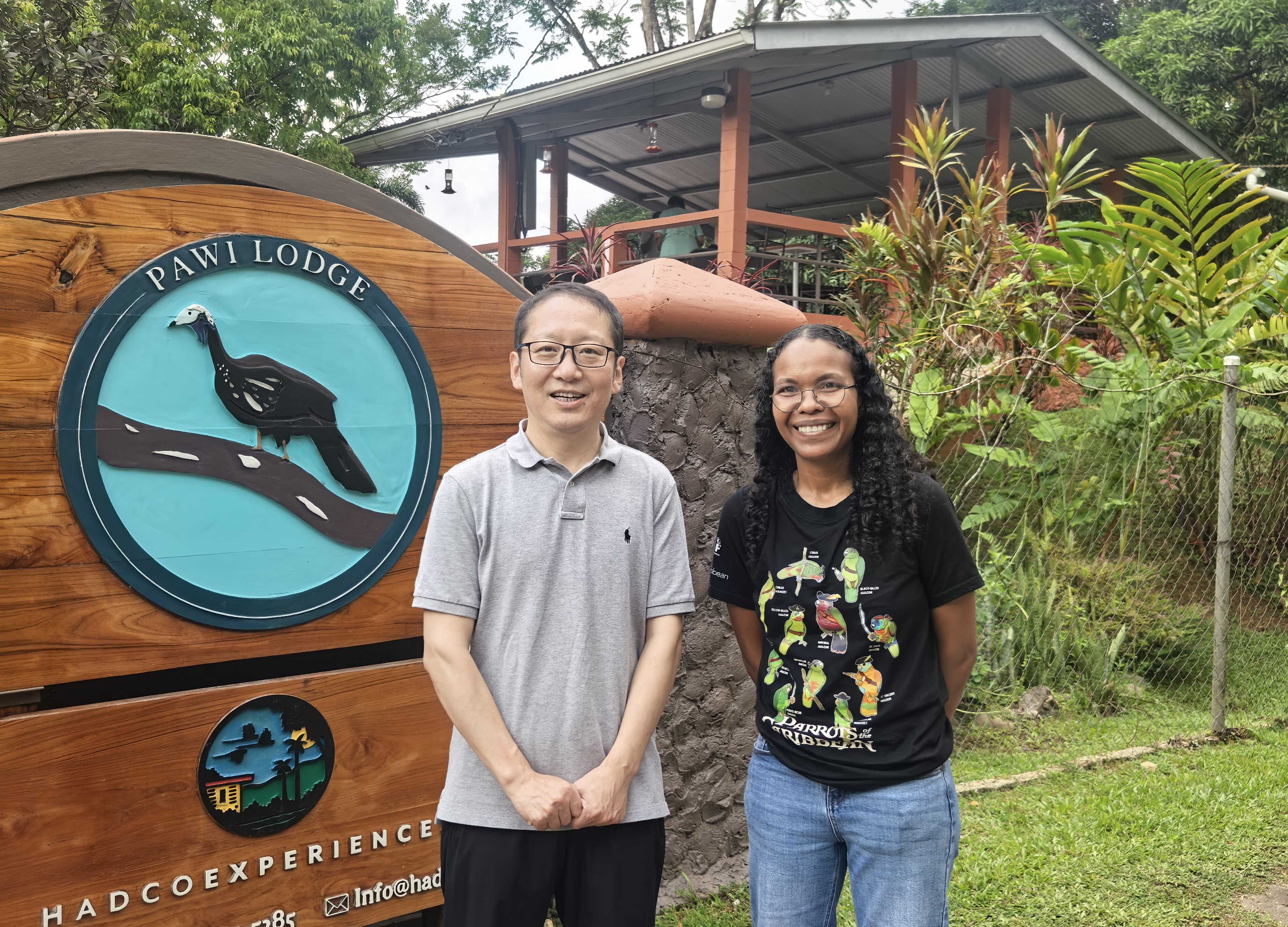
Ambassador Ren noted that both China and Trinidad and Tobago place a high priority on environmental protection and are globally renowned for their rich and unique biodiversity. The Embassy stands ready to partner with the Trinidad and Tobago side to advance green development. Together, we can strengthen cooperation in breeding, conservation and scientific research for rare species like the leatherback turtle and the Pawi, contributing to global biodiversity governance. The leatherback turtle is the largest living turtle species and is classified as Vulnerable on the IUCN Red List, and Grand Riviere Beach boasts one of the highest nesting densities for these turtles in the world. Trinidad Piping-guan is endemic to the island of Trinidad and has been classified as Critically Endangered by the IUCN since 1994, with an estimated global population of only 200 individuals.
|


